

Dolby Atmos Music: ADM BWF, Binaural Audio and Apple Music Explained
Understand Dolby Atmos music, object-based mixing, ADM BWF delivery and binaural headphone playback before planning an immersive release.
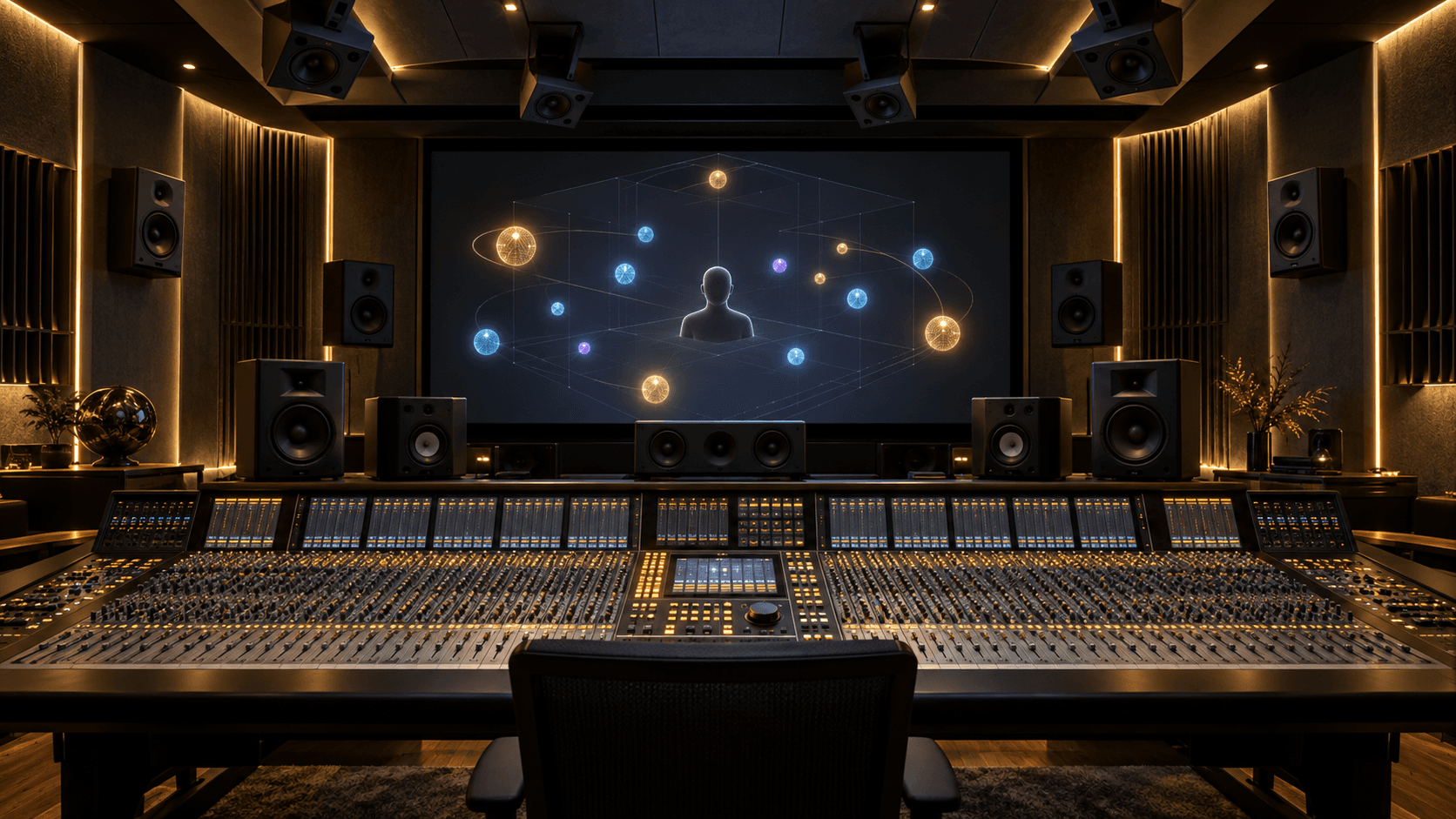
Dolby Atmos gives a music mixer a three-dimensional sound field rather than only a left-to-right stereo picture. Instruments can remain anchored to speakers, move through the room or occupy space above the listener. The format also carries metadata that helps compatible systems adapt the experience to headphones, soundbars, cars and multichannel rooms.
That flexibility creates unfamiliar terminology. ADM BWF is not the same thing as a binaural render, and an Atmos master does not replace the normal stereo master. Here is what artists and labels need to know.
Beds, objects and metadata
A conventional stereo mix commits every sound to two channels. Dolby Atmos can combine channel-based beds with independently positioned objects.
A bed is useful for material that belongs to a stable speaker layout, such as a room ambience or a group of instruments. An object is an audio signal plus metadata describing its position and movement. The playback renderer uses that information to produce an appropriate output for the listener's system.
Objects are not automatically better than beds. The mixer's job is to choose the representation that communicates the music reliably. A lead vocal may stay firmly in front while percussion, reverbs or effects extend around and above the listener.
What ADM BWF means
ADM stands for Audio Definition Model, and BWF means Broadcast Wave Format. In an Atmos music workflow, an ADM BWF is a `.wav` master file that can carry the bed and object audio as PCM together with the metadata needed to reconstruct the immersive mix.
Dolby's official master-format overview describes ADM BWF as an open-standard extension of the Broadcast Wave format and notes that it is widely accepted by streaming services and labels. Many Atmos-capable DAWs can export or import it directly.
Think of the ADM BWF as a delivery master, not as a normal stereo file that happens to be larger. It contains the information required for a downstream renderer or encoder to create different playback experiences.
What the Dolby Atmos Renderer does
The renderer combines the audio and positional instructions, then produces monitoring and deliverable formats. In a properly configured studio, it lets the mixer hear the work through the chosen speaker layout and create approved headphone renders.
The renderer can also generate or validate master files, depending on the DAW workflow. Dolby's getting-started guidance explains that supported distributors and labels commonly require an Atmos ADM file in WAV format.
The process needs accurate routing, synchronisation, room calibration and quality control. Simply inserting a spatial panner does not turn a stereo mix into a professional immersive master.
What binaural audio is
Binaural rendering translates the three-dimensional mix for two-channel headphone listening. It uses filtering and level, timing and frequency cues to suggest that sounds are in front, beside, behind or above the listener.
The result is still two-channel audio at the headphone output, but it is derived from the immersive scene. Binaural metadata can influence how close or diffuse an object feels, depending on the production tools and playback ecosystem.
A binaural render is valuable for approvals because headphones are widely available. It is not a complete substitute for monitoring the Atmos mix in a calibrated speaker room: some balance, movement and low-frequency decisions can feel different over speakers.
ADM BWF versus binaural render
These deliverables serve different purposes:
- ADM BWF: the immersive master containing audio and spatial metadata for distribution or further encoding.
- Binaural render: a two-channel reference representing the immersive mix over headphones.
- Stereo master: the separately approved conventional stereo version used for normal stereo playback.
Dolby advises delivering the regular stereo mix in addition to the ADM BWF. The stereo version should be the proper stereo production—not a binaural render repurposed as the stereo master.
How Apple Music playback fits in
When an approved Atmos master reaches a supporting distributor and Apple Music, compatible playback devices can receive an immersive version. The exact result depends on the device, listening mode and the listener's settings. Headphones, soundbars and speaker systems do not all render the scene in the same way.
This is why the mix must be checked in more than one representation. The artistic hierarchy should survive: the lead vocal should remain intentional, the groove should stay stable and spatial movement should support the arrangement rather than distract from it.
The Apple Digital Masters programme is a separate stereo-mastering workflow. An engineer or studio being approved for Apple Digital Masters does not by itself certify every Atmos mix, and an ADM BWF is not automatically an Apple Digital Master.
When an Atmos mix should begin
The strongest workflow begins with approved, organised multitracks or stems. Decisions made only in the stereo mix—especially heavy bus processing or shared effects—may not transfer automatically to the immersive session.
Before starting, confirm:
- the final arrangement and vocal edits;
- the sample rate and tempo map;
- which creative effects must be preserved;
- whether suitable dry and printed versions exist;
- who will approve the speaker and binaural presentations; and
- the distributor's current delivery specification.
If the stereo mix already exists, supply stems that rebuild it accurately. Include the approved stereo master as a tonal and emotional reference.
Creative choices that usually translate well
Atmos does not require every sound to move. Constant motion can reduce focus and make the mix tiring.
Useful approaches include extending reverbs into the room, placing supporting textures around the listener, using height for selected percussion or effects, and creating controlled contrast between intimate verses and expansive choruses. The centre of attention should remain clear.
Low-frequency management also matters. The immersive mix needs weight without allowing bass energy to behave unpredictably across playback systems.
Quality-control checks before delivery
An Atmos master should be reviewed for:
- correct start, duration and sample rate;
- missing or silent objects;
- unintended clipping or overloads;
- dialogue or vocal intelligibility;
- stable downmix and binaural balances;
- appropriate object positions and movement;
- metadata and file-format compliance; and
- agreement with the approved musical intent.
Listen continuously from beginning to end. A file can pass a technical validator while still containing a distracting pan or a vocal balance that changes in headphones.
Frequently asked questions
Can I upload an ADM BWF directly to Apple Music?
Artists normally deliver through a label or distributor that supports Dolby Atmos music. Confirm its current onboarding and file requirements before booking the final delivery.
Do I still need a stereo master?
Yes. Dolby's guidance says the regular stereo mix is delivered alongside the ADM BWF so non-Atmos playback can receive the intended stereo version.
Is a binaural WAV the Atmos master?
No. It is a two-channel render for headphone listening or approval. The ADM BWF carries the immersive audio and metadata used in the distribution chain.
Can an Atmos mix be created from a stereo master?
A convincing result normally requires multitracks or well-prepared stems. A stereo file does not provide independent access to the instruments and spaces needed for deliberate object placement.
Plan an immersive release properly
Explore our Dolby Atmos and spatial-audio service, learn how to prepare and export stems, or contact Mix & Master Engineers with your session format, distributor and release schedule. We can identify the required assets before production begins.