

Mixing vs Mastering: What Each Stage Actually Changes
Understand the real difference between mixing and mastering, what each engineer can change, and which service your song needs before release.
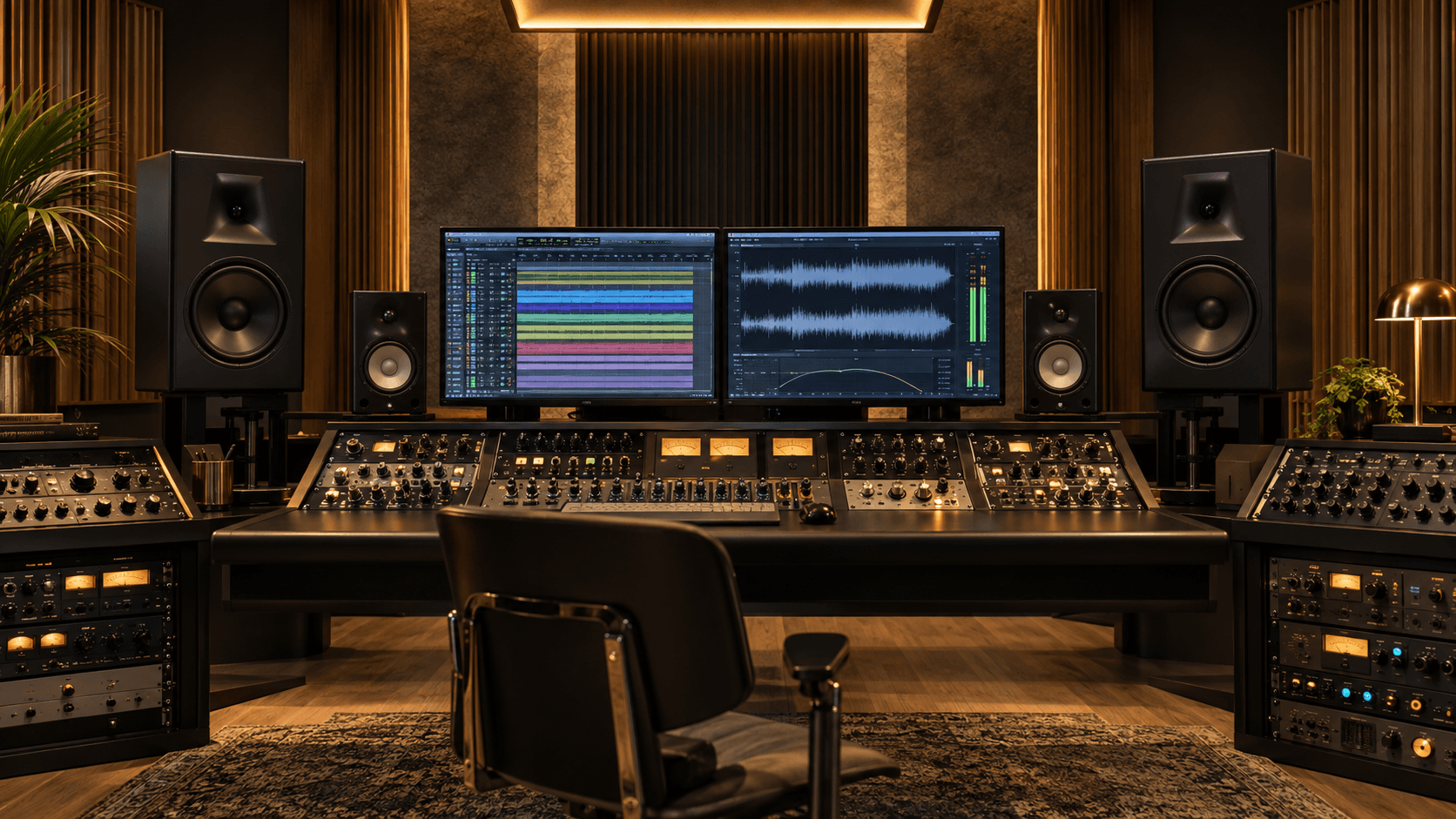
Mixing and mastering are connected stages, but they solve different problems. Mixing shapes the relationships inside a song. Mastering evaluates the finished mix as one complete stereo programme and prepares it for release.
Knowing the difference helps you book the right service, prepare the correct files and avoid expecting the mastering stage to repair a mix that still needs access to individual instruments.
What happens during mixing?
A mixing engineer receives the separate parts of the production: drums, bass, guitars, keyboards, lead vocals, harmonies, effects and other elements. The goal is to make those parts work together as a convincing record.
That work can include:
- setting the level and stereo position of each instrument;
- controlling harshness, muddiness and unwanted resonances;
- shaping tone with equalisation;
- controlling dynamics with compression, automation and saturation;
- creating depth with reverbs and delays;
- managing low-frequency relationships between kick and bass;
- keeping vocals intelligible when the arrangement becomes dense; and
- building movement between verses, choruses and transitions.
Mixing is not only correction. It is also presentation. A vocal can feel intimate or larger than life; drums can feel natural or aggressive; a chorus can open wider than a verse. Those choices should support the song rather than display processing for its own sake.
Because the engineer has access to individual tracks, a mixing decision can be highly specific. If one backing vocal masks one word in the lead, that backing vocal can be automated. If the snare is too sharp, the snare can be treated without darkening the entire mix.
What happens during mastering?
Mastering begins after the mix is approved. The mastering engineer normally works from the final stereo mix, not from the full multitrack session. The focus shifts from internal balance to overall translation, consistency and delivery.
Mastering may involve:
- subtle tonal and dynamic adjustments to the complete mix;
- controlling peaks and setting an appropriate final level;
- checking mono compatibility, phase behaviour and technical errors;
- comparing the song with relevant releases at matched listening levels;
- sequencing and matching songs across an EP or album;
- adding appropriate fades and spacing;
- creating release-ready files in the required formats; and
- quality-control listening after conversion or encoding.
A strong master should preserve the character of the mix. It may improve focus, impact and consistency, but it cannot independently rebalance the kick, replace a vocal effect or turn down one guitar when those sounds are already combined into a stereo file.
A simple way to hear the distinction
Imagine a chorus where the lead vocal disappears behind distorted guitars.
During mixing, the engineer can lower or reshape the guitars, automate the vocal, adjust the vocal compression, change effects or create space in other instruments. Those are targeted changes.
During mastering, an engineer can make a broad tonal or dynamic adjustment, but any change also affects the drums, bass and everything else in the same frequency range. Mastering may improve the result slightly, yet it is not the cleanest stage for solving that balance problem.
Now imagine the mix already feels balanced, but the finished song is slightly dull compared with the rest of an EP and its peaks are not controlled for release. That is a mastering task.
What mastering cannot safely rescue
Mastering is powerful, but it is not a repair service for every production issue. Return to the mix when you hear:
- a vocal that is consistently too loud or too quiet;
- one instrument masking another;
- excessive reverb on a specific track;
- clipped or distorted recordings;
- timing, tuning or edit problems;
- a kick and bass relationship that changes unpredictably; or
- major arrangement concerns.
It is usually faster and more transparent to solve these issues where the separate parts are still available.
When stem mastering can help
Stem mastering sits between traditional mixing and stereo mastering. The engineer receives a small number of grouped files—perhaps drums, bass, music, lead vocals and backing vocals—instead of the full multitrack session.
This can provide limited balance control when a stereo mix needs more flexibility, but it is not automatically better. The stems must rebuild the approved mix correctly, and interactions between bus processing can change when groups are exported separately. Use stem mastering because the project needs it, not because the term sounds more advanced.
How to know which service you need
Ask what you want to change.
Choose mixing when your notes name individual elements: “the vocal needs more presence”, “the snare is harsh”, “the bridge should feel wider”, or “the bass disappears on small speakers”.
Choose mastering when the internal relationships are approved and your questions concern the final record: “does this translate?”, “is the level appropriate?”, “can the EP feel consistent?”, or “which release files do I need?”
If both stages are unfinished, book mixing first and mastering after the mix is approved. Keeping the decisions in the correct order reduces compromise.
What files are needed for each stage?
For mixing, supply consolidated WAV or AIFF multitracks, an approved rough mix, project notes and any important references. Every file should start at the same point. Our stem-preparation guide explains the process.
For mastering, supply the approved stereo mix at its native sample rate and bit depth. Avoid clipping and unnecessary sample-rate conversion. If a limiter is only being used for loudness, send an un-limited version; if it is essential to the sound, discuss it with the engineer and provide both versions when requested.
Should the same person mix and master the song?
Either workflow can succeed. One engineer offers continuity and already understands the production. A separate mastering engineer offers a fresh room, monitoring system and perspective after the mix has been heard many times.
The important questions are whether each stage receives focused attention, whether the engineer communicates clearly and whether the result is checked on an accurate monitoring system. Job titles alone do not guarantee quality.
Frequently asked questions
Can mastering make my vocal louder?
Only in a broad and limited way because the vocal shares frequencies with other instruments. If the vocal balance is wrong, revise the mix or provide suitable stems when the mastering engineer requests them.
Do I need mastering if my mix is already loud?
Loudness is only one part of mastering. Translation, tonal balance, peak behaviour, sequencing, metadata and correct delivery formats still matter. A loud mix can still be unready for release.
Should I master before uploading to streaming services?
Yes. Deliver a finished master; do not expect a streaming platform's loudness normalisation to perform mastering. Normalisation changes playback gain, not the artistic balance of your audio.
Can an online service do both stages?
Yes, provided the process includes direct communication, suitable monitoring and clear revision and delivery policies. Listen to relevant examples and ask what files the engineer expects.
Choose the right next step
Listen to our before-and-after work, compare the mixing and mastering packages, or contact the studio with your current bounce. Tell us what you still want to change, and we can help identify the correct stage without overselling work you do not need.