

Stem Mastering vs Stereo Mastering: Which One Should You Choose?
Decide whether to send one approved stereo mix or grouped stems by understanding the benefits, limits and preparation requirements of each workflow.
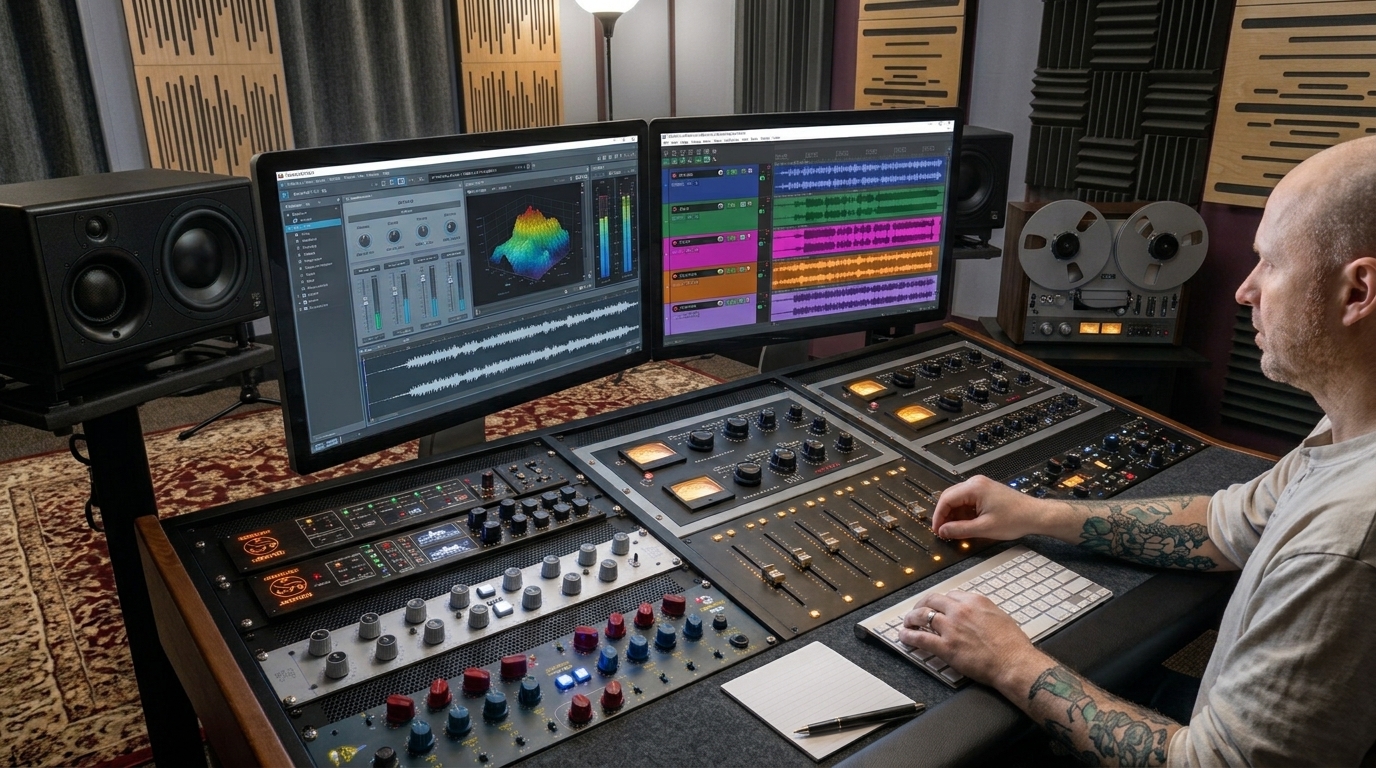
Traditional mastering uses one approved stereo mix. Stem mastering uses a small number of grouped submixes, such as drums, bass, music, lead vocals and backing vocals.
More files provide more access, but they do not automatically create a better master. The correct method depends on the state of the mix and the reason extra control is needed.
How stereo mastering works
The mastering engineer processes the complete left-right mix as one file. Every musical relationship has already been approved.
This keeps the mix engineer's balances, bus processing and automation intact. The mastering stage focuses on final tone, dynamics, level, translation and delivery.
Stereo mastering is usually the best choice when the mix is finished and communicates the intended result.
How stem mastering works
The mix is divided into a small number of groups. A typical set might include:
- Drums and percussion
- Bass
- Instruments
- Lead vocals
- Backing vocals
- Effects
The groups play together to reconstruct the mix. The mastering engineer can then make limited changes to one area without affecting every other element.
When stem mastering can help
Stem mastering may be useful when:
- The vocal needs small independent control
- The low end is difficult to manage in the stereo mix
- An instrumental or performance version is required
- Mix-bus processing prevents a clean stereo correction
- The project needs grouped assets for another approved purpose
It can also help with sessions mixed by the artist when the broad direction is good but a few relationships remain difficult.
When stereo mastering is the better choice
Choose stereo mastering when:
- The mix is approved
- Internal balances are deliberate
- Bus compression and shared effects are important
- You want the mastering engineer to evaluate the record as listeners will hear it
- Extra stem preparation would create more uncertainty than control
A finished mix should not be separated simply because stems sound more advanced.
Stem mastering is not a replacement for mixing
Five or six groups allow useful broad adjustments, but they do not provide the detailed access of a full mix session. The engineer may not be able to change one snare, one harmony or one guitar inside a combined stem.
If the arrangement, effects, panning and balances are still being built, the project needs mixing rather than mastering.
Shared processing can complicate reconstruction
A mix-bus compressor reacts to all tracks together. If drums, vocals and instruments are printed separately, that interaction may change.
Shared reverbs and delays can also cross several groups. Decide whether to print them into related stems, provide a separate effects stem or use another method agreed with the engineer.
The sum of the exported stems should be compared with the approved stereo mix. Small technical differences may occur, but a major tonal or dynamic change is a warning.
How to prepare stems
Every stem should:
- Start at the same timeline position
- Use the same sample rate and bit depth
- Preserve intended automation
- Avoid unintended clipping
- Include complete effect tails
- Have a clear name
Import the stems into an empty session and play them at unity. Compare the result with the approved mix.
Use How to Prepare and Export Stems for Online Mixing for the full checklist.
Cost and turnaround
Stem mastering requires more file preparation, routing, processing and quality control than stereo mastering. Studios may price it differently and allow additional time.
Request the correct service before delivery. Sending a folder of grouped files without explanation can delay the project.
Revision expectations
A stem-mastering revision can make modest group-level changes. It still should not become a new mix session.
If the artist begins replacing sounds, changing edits or rewriting automation, pause and return to mixing. Clear stage boundaries protect the final result and the schedule.
A simple decision test
Ask: “Is the mix approved, or am I hoping mastering will finish the mix for me?”
If it is approved, stereo mastering is usually appropriate. If one or two broad relationships need limited control and the stems reconstruct reliably, stem mastering may help. If many decisions remain, book mixing.
To choose the correct workflow, explore mastering, mixing, or contact the studio with your current mix and project goals.
What to include with your mastering request
Whichever option you choose, the files are only part of the request. A short, clear set of notes helps the mastering engineer understand your goals and avoid guesswork.
Useful things to include:
- The final mix or stems at the session's sample rate and bit depth. Do not convert to MP3, and avoid converting the sample rate before you send.
- Headroom on the file. Leave the mix bus limiter off unless it is part of the sound. If it is, say so, and consider sending a version without it as well.
- One or two reference tracks. Choose released songs in a similar style whose tone and energy you like. Say what you like about each one, such as the low end, the brightness or how loud it feels.
- The release format. Streaming, vinyl, CD, sync, or a mix of these. Each can affect loudness and delivery choices.
- Track order and gaps if the song belongs to an EP or album.
- Any known issues. If you already hear a harsh vocal note or a boomy bass note in one section, mention the timestamp.
- Metadata you need embedded, such as ISRC codes, if the engineer offers that service.
For stem mastering, add a little more:
- A list of stem names and what each one contains.
- Confirmation that all stems start at the same point and are the same length.
- A note about any processing that was on the mix bus, so it can be recreated or left out on purpose.
- The stereo mix bounce from the same session, so the engineer can compare the stems against what you approved.
Keep your notes short. A clear paragraph and a bullet list are better than a long message. If you are unsure about something, such as how loud the master should be, say that too. A good engineer will explain the options rather than guess.
From the studio: how I decide between stems and a stereo file
My default is a stereo master. If the mix is approved and balanced, a single file gives me the clearest picture of the song as the artist and mixer intended it. In more than 15 years of mixing and mastering, I have found that a good stereo mix is still the best starting point.
I suggest stems when there is a specific problem that cannot be fixed cleanly on the full mix, and there is no time or budget to go back to the mixer. A typical case is a vocal that sits a little low against a busy beat, or a bass line fighting the kick.
Here is a recent example. On a rap song, the stereo mix had a piercing brightness: the sharp hi-hat frequencies overlapped the range the vocal de-esser was working in, so EQ on the full mix would also have dulled the voice. I asked for grouped stems (vocal, drums, bass and synths). With the drums on their own, I softened their top end with a high-shelf cut and left the vocal untouched. The master came out smooth and loud with no ear fatigue, and it kept the character of the original mix.
Genre can push the decision. Heavy low end in drill or amapiano sometimes needs separate control of the bass and drums. A dancehall riddim with a lead vocal on top can benefit from a vocal stem when the balance is close but not quite right.
Before I accept stems, I check that they sum back to the approved mix. If they do not, I ask for a fresh export first.
Frequently asked questions
How many stems should I send for stem mastering?
Use a small, purposeful group set agreed with the engineer. Too many files turn the project into mixing; too few may not provide the needed control.
Should stems include mix-bus processing?
It depends on the routing and sound. Shared processing may not divide cleanly, so confirm the printing method and always supply the approved stereo reference.
Is stem mastering always more expensive?
It usually involves more setup and quality control, so pricing may be higher. Check the studio's scope before booking.
Can stem mastering fix a bad vocal recording?
It can adjust the vocal group's level and tone within limits, but it cannot restore information lost to clipping, severe room sound or poor performance.
Ready for a professional release?
If you need help with mixing, mastering, vocal production or Dolby Atmos, send us your track details and we will recommend the service that fits your song. View services and packages or contact the studio.
Keep reading
- Loudness targets for streaming masters
- Mixing vs mastering: what each stage changes
- Amapiano mixing and mastering
- Mixing and mastering for Houston artists
---
About the author: Charles "DGUNZ" Alison is the lead mixing and mastering engineer at Mix & Master Engineers, with 15+ years of experience across hip-hop, Afrobeats, gospel, R&B, pop and more. He trained at Point Blank Music School (UK), is an approved Apple Digital Masters provider, and has been a Top Rated, Vetted Pro engineer on Fiverr for 6 years, with 2,200+ client reviews. Meet the engineer · Contact the studio